Large vehicles · Mesa, AZ
Truck & SUV Detailing in Mesa
Mesa runs on trucks and three-row SUVs — work vehicles on the 60, family haulers around Eastmark and Augusta Ranch, and weekend rigs that spend Saturdays somewhere dusty. They are all bigger jobs than a sedan, in ways that matter to both the quote and the result.
The service is [mobile detailing](/mobile-detailing) at your home or job site — the difference on a truck or SUV is scope, not process.
- Crew cabs, three-row SUVs, lifted trucks
- Cargo areas and truck beds included
- Trail dust and work-site contamination
- Performed at home or the job site
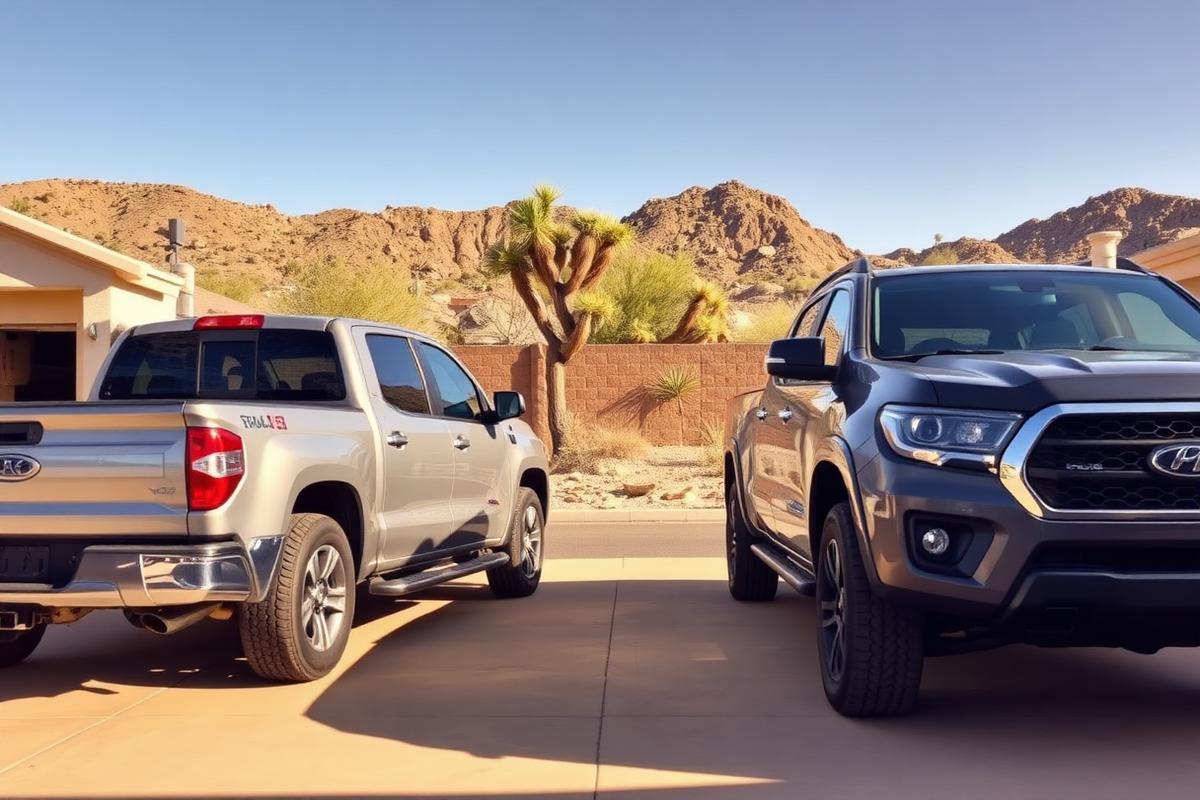
More vehicle, more of everything
A crew-cab truck can carry close to double the paint surface of a compact car, plus taller sides that need reaching safely and a bed that is a separate job on its own. Inside, a three-row SUV has more carpet, more seating and more cupholders than most people want to think about, and the third row is usually the dirtiest part of the vehicle because nobody cleans what they cannot see.
This is why honest pricing on large vehicles has to come after a look at the vehicle. The scope of full car detailing is the same; the hours are not.
The parts people forget
- Third-row seating and the well behind it — sand, crumbs and forgotten cargo, cleaned properly rather than skimmed
- Cargo area carpet — often the most contaminated soft surface in a family SUV, and a candidate for deep interior cleaning
- Truck beds and liners — degreased and rinsed; ridges in spray-in liners hold more than they look like they do
- Running boards, rocker panels and wheel wells — the parts that catch everything the desert throws up
- Roof and upper panels — the areas most affected by UV, and the hardest to see damage on until it is advanced
Lifted trucks and off-road rigs
A lift changes access more than it changes the work itself. Taller sidewalls and upper panels take more reach and more time, and aftermarket bumpers, rock rails and roof racks each add a surface that has to be cleaned around rather than over. None of it is a problem, but it is a scope difference worth mentioning on the phone.
Off-road use adds its own contamination profile: mud in wheel wells and door jambs, dust packed into carpet fibers, and grit worked into seat bolsters from gear and boots. The exterior wash on a trail-driven vehicle typically needs a heavier pre-rinse before any contact wash begins, for the same abrasion reasons covered in monsoon and dust car care.
Interior scope on a bigger cabin
A three-row interior is not just "more of the same" as a sedan — it is a different job. There are more door panels, more seat tracks for debris to hide in, and often a second climate zone with its own vents to clean. Interior detailing on these vehicles focuses on the areas that get skipped in a quick clean: third-row footwells, cargo-area seams, and the gap between fold-flat seats where sand and crumbs collect.
Fabric and leather condition matters here too. A truck or SUV that spends real time outdoors gets more heat exposure through its glass than most people expect, which is part of why protecting a car interior from Arizona heat is worth reading if the dash or seats are already showing wear.
Sun exposure on a big flat roof
Large vehicles have large horizontal panels, and horizontal panels take the most direct UV. On outdoor-parked trucks in Mesa, oxidation almost always shows first on the roof, hood and bed rails while the doors still look acceptable.
If those panels have gone flat or chalky, that is clear coat degradation and it needs paint correction rather than a better wax. Afterward, a ceramic coating is worth more on a truck than on a garaged sedan precisely because the exposure is worse.
Water spots and washing a taller vehicle
The same hard-water etching that affects sedans is worse on trucks in one respect: a taller hood and roof dry faster in direct sun because there is more exposed area catching heat at once. That makes technique and timing matter more, not less. See hard water spots in Mesa for what causes it and how it is prevented between visits.
Between full details, a mobile car wash keeps a large vehicle from accumulating the dry-wipe marring that shows up worst on tall, flat panels under direct light.
Work trucks and desert use
Work vehicles get treated as work vehicles: the goal is a clean, professional-looking truck that holds up between visits, not a show finish that lasts an afternoon. For companies running several, fleet detailing handles multiple vehicles, and scheduling and arrangements are worked out by phone.
For off-road use, the priority is getting abrasive dust out of the paint and out of the interior fabric before it does long-term damage. Dust storms make that worse for everyone — monsoon dust car care covers the right order of operations.
Bed liners: spray-in vs drop-in
The two liner types clean differently. A spray-in liner is textured and bonded to the bed, so grime and dust settle into the texture rather than sitting on top of it — it needs a brush and degreaser worked into the surface, not a quick rinse. A drop-in liner can be lifted out (or at least pulled up along the edges) to clean underneath it, where moisture and debris tend to collect against the bare bed metal and are easy to forget about entirely.
Either way, a bed with visible work contamination — concrete splatter, fertilizer, oil drips — takes longer than a bed used mainly for hauling clean cargo, so describing recent use helps the estimate.
Tailgates, running boards, step bars and fender flares
A tailgate collects its own contamination profile: exhaust residue at the bottom edge, handprints and scuffs around the latch, and dust baked onto the outer face by direct sun. Running boards and step bars sit directly in the tire spray path and are stepped on daily, so they need real scrubbing rather than a pass with a wash mitt.
Fender flares, especially the matte or textured plastic kind common on trucks and off-road SUVs, hold dust in their surface texture and often fade unevenly under sun exposure. They get cleaned with brush agitation as part of the lower-body work, and a trim dressing can be discussed if the plastic looks chalky.
Towing hardware and roof-mounted accessories
Hitch receivers, ball mounts and trailer wiring plugs accumulate grease and road film that a standard wash misses because they sit low and out of the way. If the vehicle tows regularly, mentioning it helps make sure that hardware gets attention rather than a quick pass around it.
Roof rails and crossbars have mounting points and channels where pollen, dust and water collect, and on a taller vehicle they sit at a height that is easy to overlook from the ground. They are cleaned as part of the roof and upper-panel pass on vehicles that have them.
Undercarriage and wheel wells after off-road or desert driving
Trail dust and desert grit do not stay on the paint — they pack into wheel wells, work into door shuts, and coat the undercarriage in a fine layer that is abrasive if it later gets dragged around by a careless wash. Door jambs in particular get overlooked on a quick wash but are exactly where fine sand accumulates and can transfer grit onto clothing or seats when the door is opened.
A thorough wheel-well rinse and a lower-body pre-rinse before any contact wash begins reduces the risk of that grit marring the paint during washing, following the same logic covered in monsoon and dust car care.
What actually drives the price on a large vehicle
Three things move the estimate more than anything else: total surface area (a crew cab or full-size SUV simply has more paint, glass and trim than a midsize vehicle), interior volume and condition (a third row and cargo area that have not been cleaned in a long time take real time to extract properly), and contamination type (desert dust and off-road mud take longer than routine dust from daily driving). A lift kit, aftermarket bumpers, roof racks and towing hardware each add incremental time rather than changing the process itself.
Describing the vehicle's size, recent use and interior condition when you call gets you a closer estimate before we see it in person.
Keeping a larger vehicle looking maintained
Because a truck or SUV shows dust faster and shows neglect more obviously — there is simply more surface for it to sit on — a recurring cadence tends to make more visible difference than on a smaller car. Maintenance detailing is built around that: shorter visits that keep exterior and interior condition from sliding between the bigger resets.
Truck & SUV questions
How do you clean a heavily textured plastic bumper or fender flare?
Can you clean roof rails, crossbars and towing hardware?
Do you clean car seats and pet-hair-covered seats?
Why do trucks and SUVs cost more to detail?
Can you handle a lifted truck?
What about a truck bed or a bed liner?
Do you detail vehicles that have been off-road?
Do running boards and rocker panels need special attention?
Can you get sand and dust out of a third row?
Is a full-size SUV priced the same as a midsize one?
Should I get ceramic coating on a truck that parks outside?
Related services
Interior and exterior in one visit.
Interior detailingThird rows, cargo areas and pet hair.
Exterior detailingDecontamination for larger painted surfaces.
RV detailingFor anything larger again.
Ceramic coatingHigh-value protection on big flat panels.
Maintenance detailingRecurring visits for vehicles that get dirty fast.
Fleet detailingMultiple trucks discussed by phone.
Monsoon & dust car careWhat storms do to trucks and off-roaders.
Get a quoteTell us cab, trim and condition.
Get a straight answer on what your vehicle needs
Describe the vehicle and its condition and you'll get a realistic price range before anyone shows up.