Mobile wash · Mesa, AZ
Mobile Car Wash in Mesa
Sometimes the vehicle does not need correcting, coating or extracting. It needs to be clean, today, without you driving anywhere or queuing behind six other cars on Power Road.
This is that service — a proper hand wash performed at your location, using technique that does not install scratches while removing dust.
- Hand wash — no brush tunnel
- Wheels, tires and glass included
- Washed at your home or workplace
- Recurring schedules available
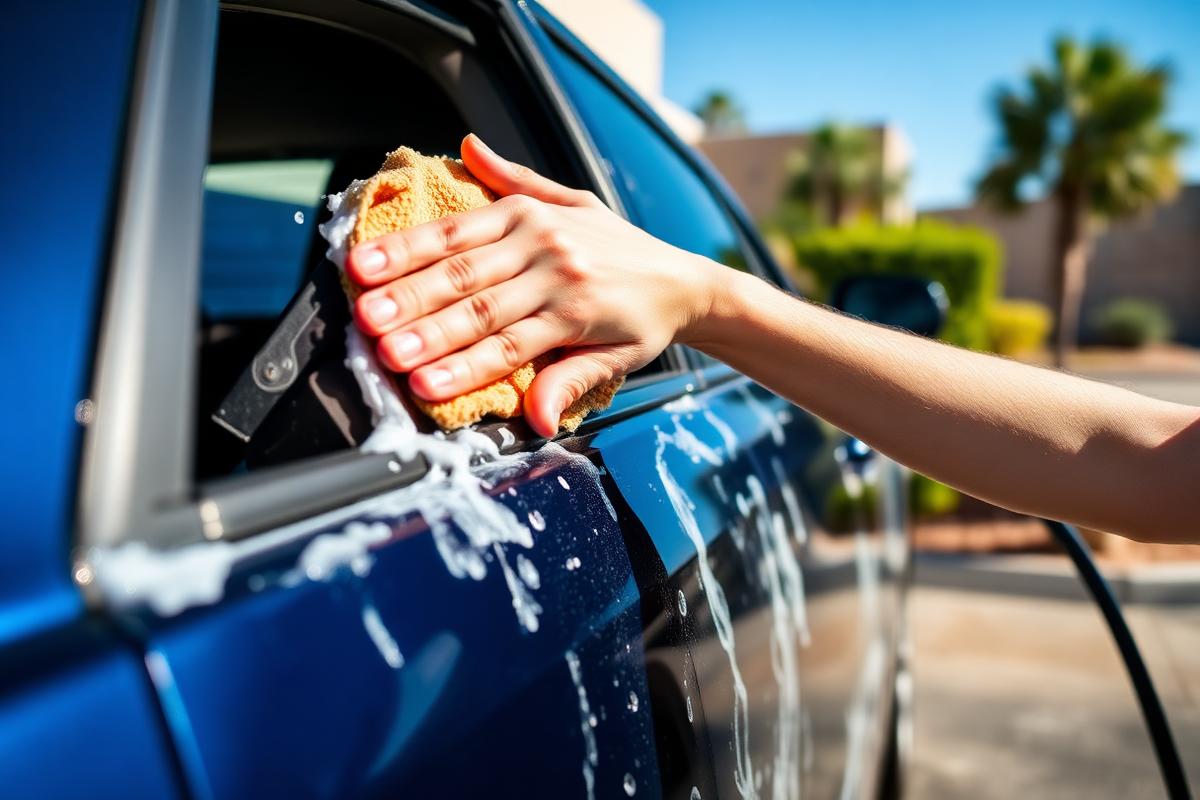
What a mobile car wash actually is
This is the basic, recurring level of upkeep: a hand wash brought to wherever the vehicle is parked, aimed at removing what is sitting on the surface before it has a chance to bond or scratch anything on the way off. It is not a shortcut version of detailing — it is a different job with a different purpose, done more often.
The problem it solves is simple. Mesa vehicles accumulate fine dust constantly, and dust left on paint gets ground in every time someone wipes it with a dry towel or drives through a dust storm. A wash on a reasonable interval keeps that abrasive layer from ever sitting there long enough to do damage.
What a wash covers
- Pre-rinse to float loose desert dust off before anything touches the paint
- Lubricated hand wash with separate media for paint, lower panels and wheels
- Wheels, tires and wheel faces cleaned rather than just rinsed
- Exterior glass and mirrors
- Dried with clean soft towels, not left to spot in the sun
- Interior tidy-up available as an add-on — full work is interior detailing
What a wash does not cover, and why
A wash is not decontamination, correction or protection. It is not designed to remove anything bonded to the paint — tree sap, overspray, baked-on mineral spotting or road tar stay right where they are, because lifting that kind of contamination safely takes a clay or chemical decontamination step, which is part of exterior detailing rather than a wash.
It also will not touch existing swirl marks, hazing or oxidation. Those are defects in the clear coat itself, and only paint correction levels the surface back out. Trying to wash away a defect just polishes expectations, not paint.
Why the tunnel wash costs more than it charges
An automatic wash is cheap and fast, and it is also the most reliable way to accumulate swirl marks. The media in a tunnel touches every vehicle that came before yours, carrying their grit. On dark paint the result is visible within months as a haze that appears whenever the sun hits at an angle.
Correcting that damage later costs many times what the washes saved. The math is unflattering, and it is the main reason a hand wash is worth the difference. Longer version: mobile detailing vs a car wash.
Why wash method is the real cause of swirl marks
Most fine scratching on a vehicle's paint does not come from a single dramatic event — it comes from repeated contact with a dirty towel, sponge or brush during washing. Grit trapped in wash media acts like sandpaper as it moves across the clear coat, and the friction is what leaves marks, not the water or soap itself. This is why two vehicles washed the same number of times can end up in very different condition depending on the method used.
The practical takeaway is that safe technique matters more than frequency. A vehicle washed carefully every week will generally look better over time than one washed carelessly every month.
What a careful wash sequence looks like
A pre-rinse floats off loose grit before anything makes contact, reducing what has to be dragged across the paint during the contact wash. Separate wash media for paint, lower panels and wheels keeps heavier road grime and brake dust from being carried up onto cleaner surfaces. Working in sections and keeping panels wet prevents soap from flash-drying and leaving its own residue. Drying with clean, soft towels rather than letting a panel air-dry in the sun avoids new mineral deposits forming right after the wash.
None of this is exotic; it is mostly about not reusing dirty media and not letting anything dry on the surface mid-process.
Automatic tunnel and brush wash risks
Brush and cloth tunnel washes reuse media across every vehicle that passes through, which means whatever grit the last few cars carried in is now touching yours. On darker paint, the resulting fine scratching shows up as a haze under direct sun within a few months of regular use. The convenience is real, but so is the cumulative cost, which usually surfaces later as a correction bill rather than at the time of the wash.
Touchless wash trade-offs
A touchless wash uses higher-pressure water and stronger detergents instead of physical contact, which avoids the media-grit problem entirely. The trade-off is that touchless washes are often less effective at lifting baked-on grime and bug residue, and the stronger chemicals used can be harder on wax, sealant or coating over repeated use. It is a reasonable occasional option but not a full substitute for a proper hand wash on a vehicle that needs real cleaning, not just a rinse.
DIY pitfalls specific to Arizona
- Washing in direct sun. Panels heat up fast here, and soap or water flash-drying on a hot surface leaves its own spotting before the rinse even finishes.
- Hard-water spotting. Mesa's mineral-heavy water leaves deposits on any panel left to air-dry, which is why drying with a towel matters as much as the wash itself.
- Dry wiping dusty paint. Wiping a dust layer off with a dry towel — even a quick one before driving somewhere — is one of the most common ways swirl marks get installed at home.
- Reusing the same wash mitt for wheels and paint. Brake dust is abrasive; carrying it up to the body panels defeats the purpose of a careful wash.
When a wash is not enough
A wash removes what is loose on the surface. It will not lift bonded contamination, correct existing swirl marks, or deep-clean an interior that has gone past a quick tidy. If the paint feels gritty after washing, looks hazy under direct sun, or water has been spotting and etching for a while, the vehicle needs exterior detailing or paint correction rather than another wash. Recognizing that line early avoids paying for repeated washes that never actually fix the underlying issue.
How this differs from a full detail
A full detail resets the vehicle: decontamination, correction where needed, interior deep cleaning, protection. A wash maintains whatever condition the vehicle is already in. Neither replaces the other — a wash on top of a neglected, oxidized car will look better for a day and reveal the same problems the moment the light hits it right.
Think of the wash as the floor that keeps a vehicle from sliding backward, and a full car detailing as the reset that raises the floor in the first place.
Who this suits, and who needs something else
A wash is the right call for a vehicle that already looks reasonably good and just needs upkeep, for a daily driver that collects dust faster than its owner can deal with, or for someone who wants a simple recurring service without thinking about it. It is not the right call for a vehicle with visible swirling, gritty paint, interior odor or stains, or one that has gone a year or more without any professional attention — those need exterior detailing or a full detail first.
Condition and Arizona factors that change the job
Dust load, sun exposure and how a vehicle is parked all affect what a wash can actually accomplish. A vehicle parked under a tree collects sap and bird droppings that need attention faster than dust. A vehicle parked in full sun all day dries faster mid-wash, which is why technique — working in sections, keeping panels wet — matters more here than in milder climates.
Sprinkler overspray is its own local problem: the mineral load in Mesa water leaves spotting on paint and glass that a wash removes easily if it is fresh, but which etches into the clear coat within days if left in direct sun. That is covered in more depth in hard water spots in Mesa.
Cost and complexity, without a price tag
What moves the time and effort on a wash visit is mostly how much has accumulated since the last one, whether there is anything stuck on rather than just resting on the surface, and vehicle size. A truck or three-row SUV simply has more surface area than a sedan. None of that changes what the service is — it changes how long it takes.
Common misconceptions
The biggest one is that a wash is a lesser version of a detail rather than a different service. Another is that washing more often wears out paint — the opposite is true; infrequent washing followed by dry wiping is what causes marring, not frequent lubricated washing. And a wash, however well done, cannot make a hazed or swirled finish look corrected, because it was never designed to change what is already embedded in the clear coat.
Keeping it on a schedule
In a dusty climate, washing frequency is the main lever you control. A vehicle washed properly every couple of weeks stays in far better condition than one washed twice a year and wiped down in between. If you want the protection renewed and the interior kept up as part of that rhythm, maintenance detailing is the version of this service with more in it.
Deciding what to book
If the car looks fine and just needs to stay that way, book a wash. If it feels gritty, looks hazy in the sun, smells inside, or it has genuinely been a long time since anything more than a rinse happened, start with exterior detailing or a full detail and set up recurring washing or maintenance detailing afterward so it does not slide back.
Mobile car wash questions
What's the difference between a wash and a detail?
How often should a car be washed in Mesa?
Is a hand wash really better than an automatic wash?
Can you wash my car every couple of weeks?
Do you wash the interior too?
Will a wash remove water spots or mineral etching?
Can I use a wash instead of a full detail?
Do you bring your own water?
What if it's monsoon season or very hot?
Why does washing at home sometimes leave my paint looking worse?
Is a touchless wash safer than a hand wash?
How do I know if my car needs a detail instead of another wash?
Related services
When the paint needs decontaminating too.
Maintenance detailingRecurring visits with protection renewal.
Full car detailingThe complete reset when it has been a while.
Wash vs detailWhich one your vehicle actually needs.
Hard water spotsWhy sprinkler overspray matters here.
Book a washHome, apartment or workplace.
Get a straight answer on what your vehicle needs
Describe the vehicle and its condition and you'll get a realistic price range before anyone shows up.