Paint protection · Mesa, AZ
Ceramic Coating in Mesa, AZ
A ceramic coating is a liquid polymer, typically silica- or quartz-based, that reacts chemically with the clear coat and cures into a hard, transparent, chemically resistant layer sitting on top of the paint. In a city where vehicles sit under direct sun most of the year, it is one of the more effective protective products available short of paint film.
It is also the product most oversold in this industry. Here is what it actually does, what it does not, and how to tell whether it is the right spend for your vehicle.
- UV and chemical resistance built for outdoor parking
- Hydrophobic — dust and water release far more easily
- Applied over corrected, decontaminated paint only
- Honest durability expectations, not marketing numbers
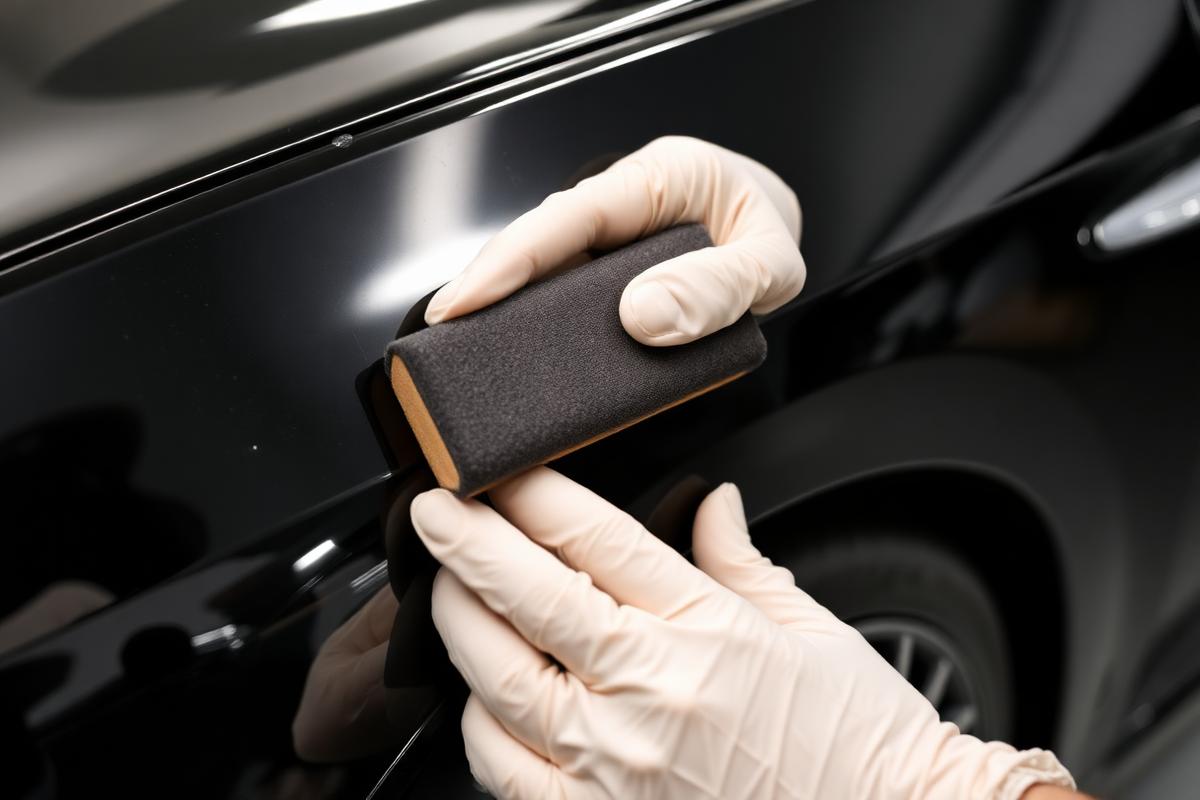
What a ceramic coating actually is
Chemically, most ceramic coatings are silica- or silicon-carbide-based formulas suspended in a solvent carrier. Once applied and the solvent flashes off, the remaining resin cross-links and cures into a thin, hard film bonded to the clear coat rather than just sitting loosely on it the way a wax does. That bond is what gives it more durability than older protective products, and it is also why it cannot simply be wiped off later — removing a cured coating means abrading or polishing it away.
In practical terms, it functions as a sacrificial, transparent shield: a barrier layer that takes the brunt of UV exposure, chemical contact and light surface abrasion so the clear coat underneath does not have to.
What a coating does
- UV resistance. The coating absorbs exposure that would otherwise degrade your clear coat over time. On a vehicle parked outdoors in Mesa, this is one of the most valuable properties it has, though it reduces the rate of UV-related degradation rather than stopping it outright.
- Hydrophobic behavior. Water beads tight and sheets off rather than spreading and evaporating slowly, which reduces — but does not eliminate — mineral spotting in a hard-water region.
- Chemical resistance. Bird droppings, bug residue, sap and sprinkler overspray sit on the coating rather than in direct contact with clear coat, so removing them promptly usually leaves nothing behind.
- Easier maintenance. Dust and road film release with less contact, which means fewer wash-induced swirl marks over time — the compounding benefit most owners underestimate.
- Gloss and depth. A cured coating adds slickness and optical clarity, though much of the visual improvement people attribute to coatings actually comes from the correction performed underneath it.
What a coating does not do
It is not scratch-proof. It resists light marring; it does not resist impact, abrasion from grit dragged across it, or anything sharp. It is not permanent — it wears gradually, it can be damaged, and it eventually needs renewal or reapplication. It does not eliminate washing; it makes washing easier and lower-risk, not optional.
It also cannot fix paint. A coating over swirled, hazy or oxidized paint preserves exactly that appearance under a glossy film, and once cured it is not something you can simply strip off to try again. If the finish is not where you want it, correct first — see paint correction.
It does not make a vehicle immune to hard-water spotting, either. Beading buys you time by keeping water mobile on the surface, but if mineral-laden water is left to evaporate in direct sun, the minerals it carries will still deposit on top of the coating, not through it. A coating changes how easy those deposits are to remove — it does not stop them from forming.
Ceramic coating vs wax vs paint sealant
These three sit on a spectrum of durability, cost and bonding strength rather than being interchangeable names for the same thing. Wax is a natural or synthetic topper that sits on the surface, looks warm, and typically needs reapplication every few weeks to a couple of months, especially at Arizona surface temperatures. A paint sealant is a synthetic polymer that bonds more durably than wax and commonly lasts several months. A ceramic coating chemically cures into the clear coat and is built for a multi-year service life when maintained correctly.
None of them is strictly better for every situation — a car being sold within the year rarely needs a multi-year coating, while a vehicle being kept long-term and parked outdoors is exactly the case a coating is designed for. The full comparison, including when wax or sealant is the smarter call, is in ceramic coating vs wax.
Ceramic coating vs paint protection film
Paint protection film (PPF) is a thick, physical urethane film applied to specific panels — usually the front bumper, hood and mirrors — and it is the correct product for impact protection: rock chips, road debris and minor abrasion. A ceramic coating is a thin chemical layer that adds gloss, chemical resistance and easier maintenance, but it does not absorb impact the way a physical film does.
They are complementary rather than competing products. A common approach is film on the high-impact front-end panels and coating over the rest of the vehicle, or coating applied on top of the film itself for easier upkeep. Neither replaces the other's job.
What determines how long a coating lasts
- Product chemistry. Different coating formulations are built for different service intervals; higher-tier products are not automatically better for every vehicle or budget.
- Preparation quality. A coating applied over incomplete decontamination bonds unevenly and tends to fail early, often in patches.
- Garage vs outdoor parking. Constant sun, heat cycling and dust exposure age a coating faster than covered or garage storage.
- Wash habits. Automated brush washes, dry wiping and infrequent washing all shorten effective life regardless of the product used.
- Environmental exposure. Bird droppings, tree sap and sprinkler mineral content left to sit repeatedly wear down the coating's surface chemistry over time.
The Arizona and Mesa factor
Mesa's climate is a genuine stress test for exterior paint protection. Extended direct UV exposure, high sustained surface temperatures, wind-blown dust and mineral-heavy municipal water all act on paint simultaneously, which is why protective products behind national durability claims are often tested in milder conditions than this valley provides.
An outdoor-parked vehicle in Mesa experiences more of all of this than a garage-kept one, so expectations for a coating's practical lifespan should be adjusted accordingly — a coating on a garaged, occasionally driven vehicle will typically look better for longer than the identical product on a daily driver parked in a sun-baked apartment lot.
Preparation and decontamination come first
A coating bonds to whatever surface it meets. If that surface carries iron fallout, bonded minerals or polish oils, the bond is compromised and the coating fails early — usually in patches, which looks worse than no coating at all.
So the sequence is fixed: a thorough decontamination wash, iron and mineral removal, a clay stage where the paint is still rough to the touch, a paint inspection under direct lighting, correction where defects justify it, then a panel wipe to strip residual oils, then application. Most of the appointment is spent before the coating bottle is opened. See exterior detailing and paint correction for those stages in detail.
When correction is — and isn't — necessary first
- New or near-new paint. Usually decontamination plus a light refinement pass. The cheapest possible route to a great long-term result.
- Well-maintained older paint. Often a one-stage polish to restore clarity, then coat.
- Swirled or oxidized paint. Multi-stage correction first. Coating over it locks the flaws in under a glossy layer and wastes the coating.
- Failing clear coat. A coating cannot save it, and applying one over failing clear coat can make the eventual repair more complicated. We will tell you if that is what we find, rather than selling you something that hides it for a few months.
New-car coating vs older or neglected paint
New-car paint is usually the simplest case: minimal defects, no accumulated contamination, and often just a light polish needed to remove factory transport marring before coating. It is also the point where the least amount of protective work locks in the best long-term result, since there is no existing damage to lock in underneath the coating.
Older or neglected paint needs an honest assessment first. Sun-baked, oxidized or heavily swirled paint may need meaningful correction before it is a candidate for coating at all, and on paint with thin remaining clear coat, the responsible answer is sometimes a lighter polish and a sealant rather than pushing for a coating-ready finish that isn't achievable without removing too much clear coat.
Living with a coated vehicle in Mesa
Maintenance is simple but not optional. Wash regularly with pH-neutral products and clean media, avoid brush tunnels entirely, remove bird droppings and sprinkler spotting quickly rather than letting them bake, and keep the vehicle out of automated washes that use recycled grit-laden water.
Coated vehicles benefit noticeably from a shorter maintenance detailing cycle, because the whole point is to keep the surface in the condition the coating was applied to. A coating that is never maintained will still degrade faster than one that is periodically rinsed and inspected.
What actually drives the cost
There is no single price for a coating because the preparation stage — not the product itself — is what varies most. The condition of the existing paint, whether correction is needed and how many stages that correction takes, the size of the vehicle, and the coating tier chosen all move the total. A neglected vehicle needing multi-stage correction before coating is a substantially different job from a new car needing a light polish, even though the end product is the same coating. For the general framework of what moves any detailing price in Mesa, see the Mesa detailing cost guide.
Is it worth the investment?
For a vehicle you intend to keep for several years and that parks outdoors in Mesa's sun and dust, a coating's UV resistance and easier maintenance tend to justify the cost over that ownership period. For a vehicle being sold or traded soon, or one that is garage-kept and rarely exposed to harsh conditions, a sealant or a maintained wax routine may deliver most of the practical benefit for less money.
The honest, unhurried version of this comparison — including where it does not make financial sense — is worked through in is ceramic coating worth it in Arizona?.
Common misconceptions
- "It means I never have to wash my car." It reduces contamination bonding, not the need to wash at all.
- "It's permanent." All coatings wear over time and eventually need renewal or reapplication.
- "Any shade tree detailer can apply it correctly." Preparation quality is the single biggest factor in how a coating performs, far more than the product brand.
- "It fixes swirls and scratches." A coating is transparent — it preserves whatever is underneath it, defects included.
- "It stops water spots completely." It reduces dwell time for water on the surface; it does not make the paint immune to mineral deposits.
Ceramic coating questions
Does ceramic coating prevent scratches?
Should I get paint correction before a ceramic coating?
How long does ceramic coating last in Arizona?
Do I still need to wash a coated car?
How long does the application take?
Is ceramic coating the same as a paint sealant?
Will a coating stop hard-water spots?
Can I coat a new car right away?
Is ceramic coating worth it for a car I plan to sell soon?
Related services
The step that decides how good the coating looks.
Exterior detailingDecontamination and preparation work.
Maintenance detailingKeeping a coated finish performing.
Coating vs wax vs sealantWhich level of protection fits.
Is it worth it here?The honest cost-benefit in Arizona.
What detailing costs in MesaThe variables behind every quote.
Get a coating quotePaint condition decides the price — let's look.
Get a straight answer on what your vehicle needs
Describe the vehicle and its condition and you'll get a realistic price range before anyone shows up.