RVs & trailers · Mesa, AZ
RV Detailing in Mesa, AZ
Mesa is full of RVs — snowbird coaches parked from October to April, fifth wheels in east-side storage lots, travel trailers sitting beside houses waiting for a cooler weekend. All of them are losing finish to the sun while they sit.
RV detailing is the work that addresses that, performed as [mobile detailing](/mobile-detailing) at your home or a storage facility that allows it.
- Motorhomes, fifth wheels, travel trailers
- Oxidation reduction and gelcoat polishing
- Roof cleaning and black streak removal
- At your home or storage facility
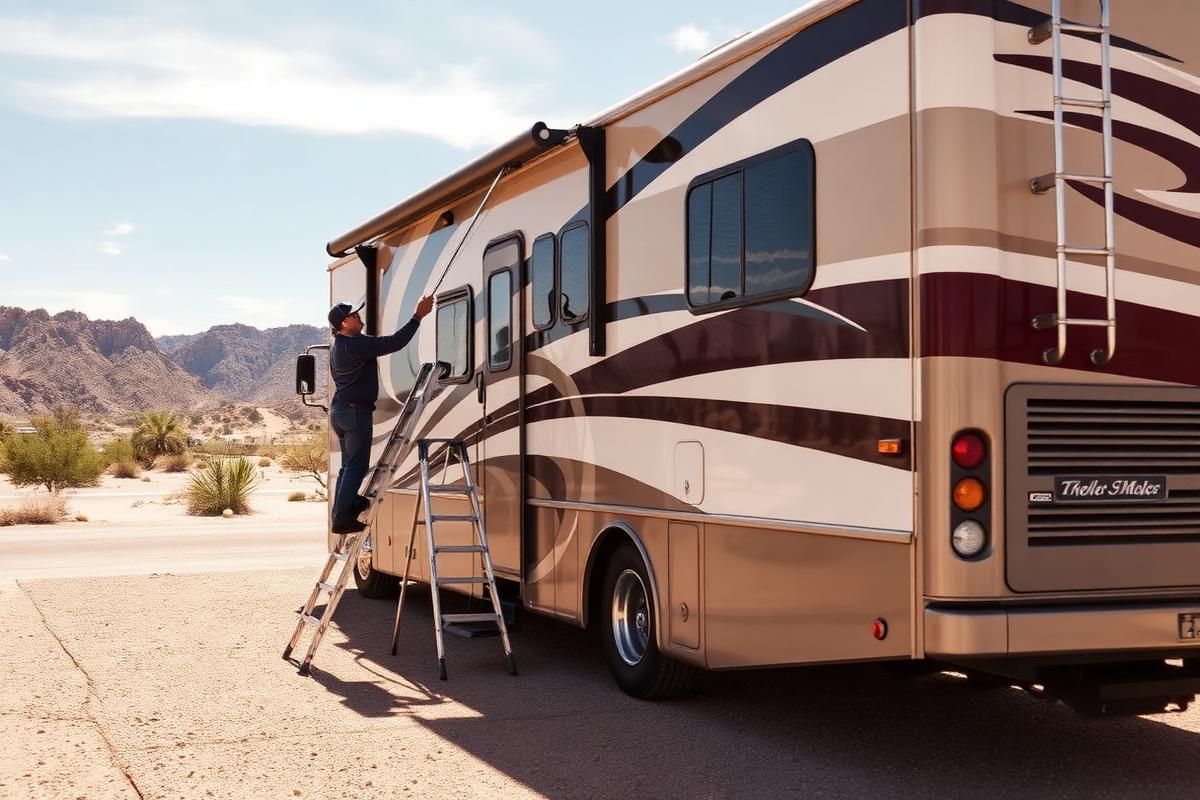
Oxidation is the main event
Gelcoat and RV paint are not as durable as automotive clear coat, and a stationary vehicle in Arizona takes a full daily dose of UV on the same panels for months at a time. The result is the chalky, faded look every long-parked RV develops — the surface layer has broken down.
It can often be improved while the damage is confined to that layer: compounding cuts back the oxidized material and polishing restores clarity. Left long enough, oxidation goes deeper than polishing can reasonably reach, and at that point the realistic outcome is improvement rather than a full return to new-panel gloss. We will tell you honestly which situation a given panel is in before starting.
Gelcoat vs painted vs decal surfaces
Not every RV is finished the same way, and it changes the approach. Fiberglass gelcoat — common on travel trailers and many motorhome sidewalls — is more porous than automotive paint and oxidizes faster, so it usually needs more aggressive compounding to bring back clarity. Some higher-end diesel pushers use an automotive-style base/clear paint system closer to a car's finish, which responds more like standard paint correction.
Vinyl decals and full-body graphics are their own category again: they are not paint and cannot be compounded the same way without risking the print or the adhesive edge. Those areas get cleaned with lower-abrasion methods and no aggressive polishing.
Roof, streaks and seals
- Roof cleaning — where most of the dirt lives, and the source of the streaking below it, addressed where it is safe to access
- Black streak removal — the runoff marks down the sides that keep returning until the roof is addressed
- Awnings and slide-outs — cleaned where accessible; slide seals collect grit that can abrade them over time
- Windows, frames and trim — mineral spotting and desert dust removed rather than smeared around
- Wheels and lower panels — road film and brake residue after travel
Roof and seal limitations, honestly stated
We clean the roof surface and the visible seams and vents around it; we do not apply roof sealants, patch seams, or diagnose leaks as a repair contractor would. If a seam or seal looks compromised during cleaning, we will point it out so it can be looked at by whoever handles RV roof repair — that is a different trade from detailing, and it is worth treating it as one.
Size and access change the job
A 35-foot motorhome has roughly the exterior surface of several cars end to end, most of it well above shoulder height. That changes both the time required and the equipment needed to reach upper panels safely. A fifth wheel's front cap and a travel trailer's lower ground clearance each present their own access quirks, which is part of why an accurate quote depends on knowing the class, length and current condition of the unit.
Space to work matters too — a driveway or a storage stall with enough clearance on at least one side makes the visit far more efficient than a tightly packed row.
Interiors that sit unused
An RV interior parked through a Phoenix-area summer bakes at temperatures no car interior sees for as long. Vinyl and upholstery dry out, adhesives soften and dust settles into everything with the unit closed up for months.
Interior work covers vacuuming, surface cleaning with products appropriate to RV materials, and UV-conscious dressing on dashboards and exposed vinyl. The same principles as interior detailing apply, at a different scale. Related reading: protecting a vehicle interior from heat.
Before storage, before the trip
The two moments worth calling around are the end of a season, when contamination should not be left to bake in for months, and the period before a trip, when it helps to have the unit clean and its protection refreshed before the miles start.
Snowbird timing works the same way: detailing before the coach sits through summer does more good than detailing after. A sealant or wax applied before a long static period sheds dust more easily than bare gelcoat does, which makes the eventual post-storage clean noticeably easier.
Fading and cracking decals: what's realistic
Vinyl graphics age differently than the gelcoat or paint around them. Years of UV exposure fade the ink, and the vinyl itself can crack or lift at the edges as the adhesive dries out. Cleaning around decals with lower-abrasion products keeps grime from building up in those edges, but it does not reverse fading or restore cracked vinyl — that is a graphics-replacement question, not a detailing one, and we will say so rather than promise an improvement that will not hold.
Awnings
Awning fabric collects dust, mildew spotting and tree debris differently than gelcoat or paint, and it needs cleaners suited to the fabric rather than the compounds used on the body. Retracted awnings also trap moisture and grime in the folds, which is often where staining is worst and easiest to miss on a quick look.
Slide-out seals and exteriors
Slide-out seals sit exposed to dust and grit every time the slide is retracted, and that grit can work against the seal material over repeated cycles. Cleaning the seal and the slide's exterior surface removes what has built up and lets you or a repair specialist see the seal's actual condition, but resealing or replacing a worn seal is outside detailing and belongs with an RV service technician.
Black streaking, in more detail
The vertical black streaks common on RV sidewalls come from dirt and oxidized material running off the roof edge with rainwater or condensation. Scrubbing the sides alone removes the visible streak but not the roof-level source, so it tends to return within one dust storm or good rain if the roof itself was not addressed at the same visit.
Access, height and space where the RV sits
Working around a large unit takes more clearance than a driveway car wash — enough room to move around the vehicle and, for roof work, a safe way to reach the top. A storage lot with units parked close together, or a driveway with a wall or fence tight to one side, can limit what is practical to reach safely on that visit. Knowing the parking situation in advance, including whether the storage facility permits on-site washing, helps set expectations before we arrive.
Pre-trip and post-trip cleaning
These two moments serve different purposes even though the work overlaps. A pre-trip visit is about starting with clear glass, clean intake vents and a tidy interior. A post-trip visit is about removing bugs, road film and any accumulated interior mess before the unit sits closed up — sometimes for months — since contamination left to bake in over a long static period is harder to remove later than it would have been fresh.
Motorhome and trailer interiors
Interior work differs by RV type as much as by size. Motorhome cabs have automotive-style dashboards and upholstery that respond to the same materials-aware cleaning as a car interior, while the living area behind it has more in common with a small home — cabinetry, upholstered dinettes, and flooring that traps dust differently than carpet. Travel trailers and fifth wheels skip the drivetrain but still need the same living-area attention. Long closed-up storage periods mean dust and any moisture intrusion often show up in corners and under dinette cushions first.
What drives cost and complexity on a large rig
Length and class set the baseline, since a Class A motorhome simply has more exterior area and interior volume than a truck camper or small trailer. Beyond that, surface condition matters more than on a car: heavy oxidation on gelcoat takes meaningfully longer to correct than a lightly hazed painted panel, and a roof that has not been cleaned in years adds real time before any polishing starts. Access at the parking location, and how much slide-out and awning work is involved, round out the estimate.
Water spotting on large flat panels
RV sidewalls and roofs are large, mostly flat, and often sit for long stretches without being touched, which is exactly the combination that lets sprinkler overspray and hard water dry into visible spotting. The mineral chemistry is the same as on cars — see hard water spots in Mesa — but the sheer panel area means it is worth checking parking position relative to sprinklers before a long storage period.
RV detailing questions
Can decals be restored once they start fading or cracking?
Do you clean before or after a trip, or both?
What makes one RV job bigger than another?
Can you detail my RV where it's stored?
What causes the chalky white finish on my RV?
How long does RV detailing take?
Do you clean the roof?
Is my RV gelcoat or painted, and does it matter?
Can you fix a failing roof seal or seam?
What about decals and graphics?
Do you detail travel trailers and fifth wheels, or only motorhomes?
Related services
Tow vehicles get dirty too.
Exterior detailingDecontamination and protection on cars.
Interior detailingCabin work for vehicles of any size.
Paint correctionFor automotive-style painted RV panels.
Heat protectionWhy interiors fail in Arizona.
Hard water spotsWhy large flat panels spot so easily.
Fleet detailingRental and commercial units, discussed by phone.
Get an RV quoteTell us length, class and where it is parked.
Get a straight answer on what your vehicle needs
Describe the vehicle and its condition and you'll get a realistic price range before anyone shows up.