Exterior detailing · Mesa, AZ
Exterior Car Detailing in Mesa
Exterior detailing is the work between a wash and a polish: getting the paint genuinely clean, removing what has bonded to it, and putting protection on top. Done properly it is also the stage that decides whether correction or coating work later is worth doing.
It is a different service from a quick rinse, and understanding what separates the two is the fastest way to judge whether a quote actually covers the work your vehicle needs.
- Two-bucket contact wash with separate media
- Wheels, barrels and wheel wells
- Iron and mineral decontamination
- Wax, sealant or ceramic protection
What a proper exterior detail actually is
A basic wash, whether a tunnel or a quick self-service rinse, removes what is loose on the surface and stops there. Exterior detailing goes further: a controlled wash method chosen to avoid installing new marring, chemical decontamination for what has bonded to the paint, dedicated attention to wheels and trim, and a protection product at the end. The full comparison against a basic wash is on the mobile car wash page.
The distinction matters because paint condition is cumulative. A vehicle that only ever gets a surface rinse slowly accumulates bonded contamination and fine marring that a wash alone will never remove, which is why the same car can look clean but feel rough, and can look shiny but still be full of swirl marks under direct sun.
The wash stage is where most damage happens
Most of the fine scratching visible on Mesa cars was installed during washing, not driving. Dry dust wiped off with a towel, a single bucket of increasingly dirty water, or a brush tunnel dragging other people's grit all grind mineral particulate across the clear coat one pass at a time.
The alternative is unglamorous: a heavy pre-rinse to float grit off before contact, plenty of lubrication, separate wash media for paint, lower panels and wheels, and drying with clean soft towels rather than letting droplets evaporate. In this climate the last part matters as much as the rest, because evaporating tap water leaves mineral deposits behind.
Wheels, tires, wheel wells and brake dust
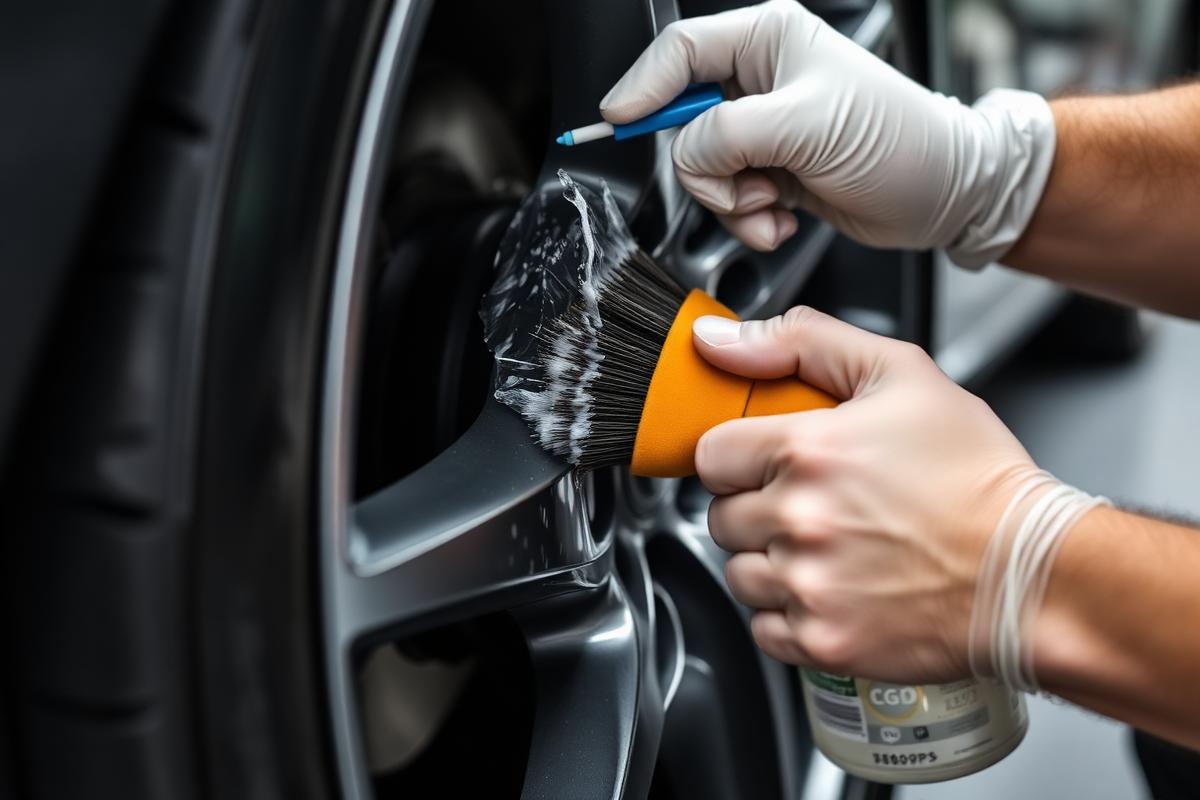
Wheels take the harshest exposure on a vehicle: heat-cycled brake dust bonds to the finish, road film builds up in the barrels, and sprinkler overspray pits unprotected surfaces over time. They get their own chemistry and dwell time, plus brushes sized for barrels, spokes and wheel wells rather than whatever is left over from the paint stage.
Tires are cleaned rather than just dressed, because dressing over road film is what causes the brownish staining that shows up on the tire's face within a couple of weeks. Wheel wells collect a mix of brake dust, road grime and, in Mesa, a fair amount of fine dust that a quick rinse does not dislodge.
Road film and bonded contamination
Road film is a thin layer of oxidized road grime, exhaust residue and airborne particulate that settles on horizontal and lower panels over weeks of driving. It is different from loose dirt because it partially bonds to the surface rather than sitting on top, which is why a normal wash dulls it slightly but does not fully clear it.
Iron fallout is a more specific version of the same problem: metal particles from brake pads and rail traffic land on the paint and, because they are metallic, continue oxidizing in place, sometimes visible as tiny orange specks on light-colored paint. A dedicated iron dissolver breaks these particles down chemically so they rinse away rather than needing to be scraped or polished off.
Clay and mechanical decontamination
Anything still gripping the surface after washing and chemical treatment — overspray, tar, embedded grit, tree sap residue — gets pulled out mechanically using a lubricated clay medium or a similar synthetic pad. This step is checked for, not assumed: running a hand or a plastic bag lightly over washed paint reveals whether the surface still feels gritty.
Clay treatment is not always necessary. If the surface already feels smooth after washing and chemical decontamination, there is nothing left for an abrasive medium to remove, and skipping it avoids unnecessary contact with the clear coat. It gets used when it is needed, not as a default step on every visit.
Mineral deposits and hard-water spotting
Sprinkler overspray and hard water left to air-dry both leave calcium and mineral deposits bonded to the surface, visible as light spotting on paint and, often more obviously, on glass. Fresh deposits typically dissolve with the right chemistry during the decontamination stage.
Deposits left for a long time can etch into the clear coat rather than just sitting on it, in which case chemical treatment lightens the spotting but polishing is what is needed to fully level the surface again. See hard water spots in Mesa for how the two cases differ and what each one needs.
Trim, glass and exterior plastics
Exterior trim — black plastic moldings, mirror caps, lower cladding — fades and can turn gray-brown under sustained UV exposure. Cleaning restores some depth of color; a dedicated trim dressing slows further fading but does not reverse plastic that has already oxidized through and through.
Glass is cleaned inside and out, and mineral spotting on the windshield gets the same dissolve-first treatment as paint, since spotting typically shows on glass long before it becomes noticeable on paint. Wiper contact areas often need a slightly different approach because embedded silicone residue from some wiper fluids resists a standard glass cleaner.
Assessing paint condition
Before any protection goes on, the surface gets inspected under direct light, ideally sun or a dedicated inspection lamp, since swirl marks and haze are largely invisible under normal shade or overcast light. This step decides whether the vehicle just needs cleaning and protection, or whether correction should happen first.
Paint condition also varies significantly by panel — horizontal surfaces like the hood and roof take the most UV and generally show more oxidation, while vertical panels often show more marring from washing and less sun damage.
Protection options: wax, sealant or coating
Protection is the final step because it seals whatever is underneath it. On a properly decontaminated surface that is a good thing; on a contaminated one it locks the problem in.
- Wax. Natural, warm finish, least durable of the three, particularly in sustained Mesa heat — expect it to wear down over weeks rather than months on an outdoor vehicle.
- Synthetic sealant. A polymer layer that bonds more durably than wax and lasts considerably longer, with a modest cost and no long cure requirement.
- Ceramic coating. A harder, longer-lasting film that needs the most preparation — correction first if the paint has defects — and a cure period before the vehicle gets wet. See ceramic coating and the comparison in ceramic coating vs wax.
When correction is needed instead
If the walk-around inspection shows swirl marks, holograms or oxidation under direct light, no amount of washing or decontamination will remove them, because those are defects in the clear coat itself rather than contamination sitting on it. The honest sequence in that case is decontamination first, then paint correction to level the surface, then protection on top of the corrected paint. Skipping the correction step and applying protection anyway just preserves the existing defects for as long as the protection lasts.
When a coating is the right next step
A coating makes the most sense on paint that is either already in good condition or has just been corrected, and on a vehicle being kept for several years, particularly if it parks outdoors in Mesa's sun and dust. It is a poor fit for paint with unresolved defects or for a vehicle being sold soon, where a sealant covers the shorter window for considerably less preparation and cost. Ceramic coating covers the process and what realistically to expect.
Arizona dust and sun considerations
Two things define exterior care in the East Valley: near-constant sun exposure that accelerates UV breakdown of clear coat, trim and rubber, and periodic dust events that deposit fine grit across every horizontal surface. Both push toward washing more frequently with the correct technique rather than washing rarely and wiping dust off dry in between, since dry-wiping fine desert grit is one of the most common causes of fine scratching on vehicles here.
After a dust storm, the sequence that avoids grinding grit into the paint matters more than the products used — see monsoon and dust car care for the order that works.
Frequency and maintenance
How often a vehicle needs a full exterior detail depends far more on where it parks and how it is washed in between than on mileage. A garage-kept car washed correctly and often needs deep decontamination work less frequently than one parked outdoors and washed rarely. Maintenance detailing is built for the gap between full details — shorter visits that keep contamination from accumulating and reduce how much correction is ever needed down the line.
Cost and time variables
- Vehicle size. Larger surface area on an SUV or truck means more time washing, decontaminating and protecting.
- Contamination level. Heavy bonded iron, tar or mineral deposits add meaningful time to the decontamination stage.
- Paint condition. Whether correction is needed changes the scope of the visit substantially.
- Protection choice. A wax application takes far less time than preparing and curing a ceramic coating.
- Wheel and trim condition. Heavily caked wheels or badly oxidized trim add labor beyond a standard pass.
Common misconceptions
- "A wash and a detail are the same thing." A wash removes loose dirt. A detail adds decontamination, dedicated wheel and trim work, and protection.
- "Wax or sealant will hide swirl marks." Protection products add gloss and slickness; they do not remove or meaningfully hide defects already in the clear coat.
- "Ceramic coating means the car never needs washing." A coating makes washing easier and safer for the paint; it does not eliminate the need for it.
- "If it looks clean, it doesn't need decontamination." Bonded contamination like iron fallout and mineral deposits is often invisible until you feel the surface or inspect it under direct light.
Exterior detailing questions
Why does my paint feel rough after washing?
Will exterior detailing remove swirl marks?
Do you use a pressure washer on my driveway?
What protection do you apply at the end?
Is clay treatment always necessary?
Can you get rid of hard-water spots?
How is this different from a basic car wash?
How often should I book exterior detailing?
Do you apply ceramic coating as part of exterior detailing?
My paint looks dull even after washing — why?
Related services
Removing defects once the surface is clean.
Ceramic coatingMulti-year protection over corrected paint.
Mobile car washMaintenance washing between details.
Full car detailingAdd the interior in the same visit.
Hard water spotsWhy sprinklers and hard water etch paint and glass.
After a dust stormThe right order of operations post-monsoon.
Headlight restorationClearing UV-hazed lenses.
Get a straight answer on what your vehicle needs
Describe the vehicle and its condition and you'll get a realistic price range before anyone shows up.