Interior detailing · Mesa, AZ
Interior Car Detailing in Mesa
The inside of a vehicle in Mesa lives a harder life than the paint does. Extreme summer cabin temperatures can bake in whatever has been spilled, dry out leather and vinyl, and drive fine dust deep into carpet fibers where a shop vac never reaches.
Interior work is where a detail is most obvious to the person actually driving the car, and it is best approached material by material rather than as a single generic wipe-down.
- Deep cleaning, not a surface spray
- Leather cleaned and conditioned
- Pet hair lifted out of the weave
- Realistic answers about stains and odors
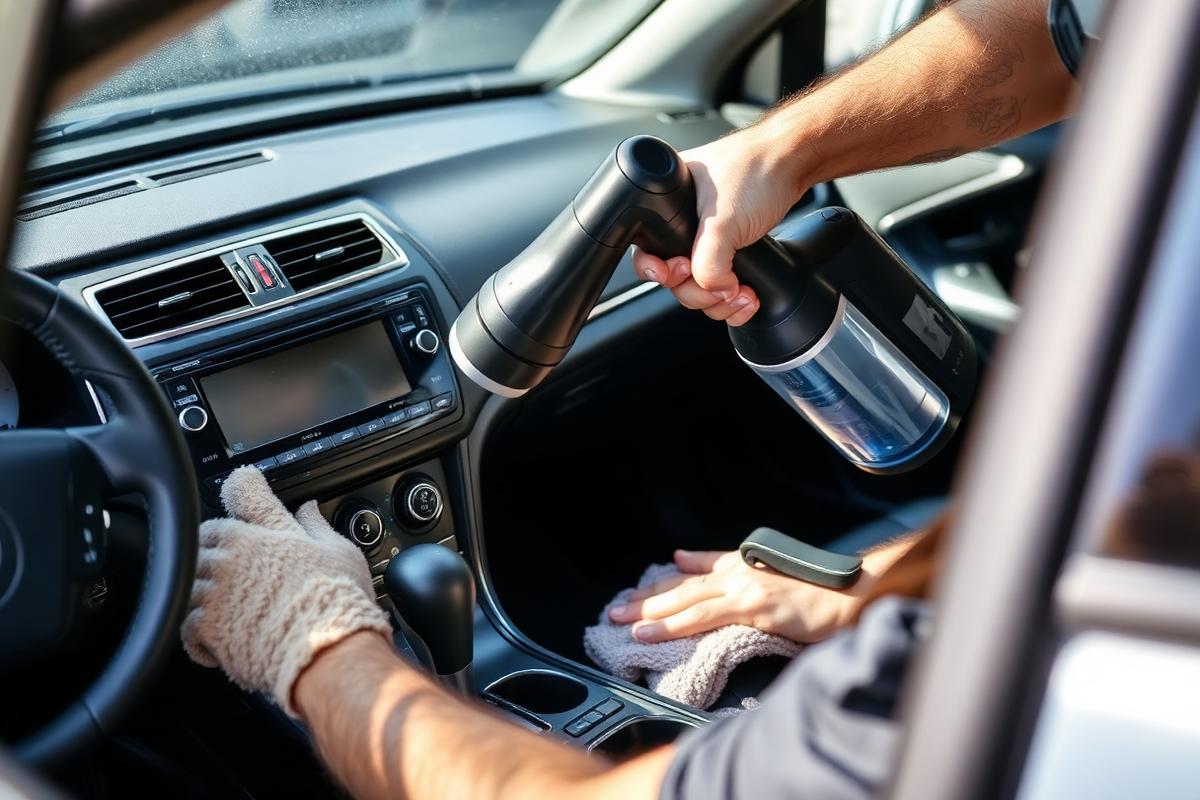
What actually gets done
- Vacuum — seats, carpets, under the seats, seat rails, trunk or cargo area, and the crevices where crumbs and sand collect
- Extraction cleaning — where carpet and cloth upholstery call for it, a wet extraction approach lifts soil out of the fibers rather than pushing it deeper; suitability depends on the material and how set-in the contamination is
- Floor mats — removed and cleaned separately, because cleaning them in place just moves dirt into the carpet underneath
- Leather — cleaned with a pH-appropriate product, then conditioned to restore flexibility
- Vinyl and hard plastics — dash, console, cup holders, door cards and switchgear cleaned, then UV-protected with a matte finish
- Detail work — vents, seams, panel gaps, seat belts and interior glass, which is where a cheap job always shows
Carpet and cloth upholstery
Carpet and cloth take the brunt of everyday life — sand tracked in from shoes, spilled drinks, crumbs worked into the weave by repeated seating pressure. Spraying a cleaner on and wiping lifts the top of the stain and pushes the rest downward, where it dries, wicks back up and reappears a week later.
A proper approach works the solution into the fibers and then pulls it back out along with whatever it has dissolved. That is the difference between a stain being removed and a stain being relocated. Older or already-worn carpet holds more soil in the weave than newer carpet, so results vary with the material's condition going in, not just how the job is done.
Leather, vinyl and plastics
Leather needs a pH-appropriate cleaner rather than an all-purpose spray, followed by a conditioner that restores some of the flexibility lost to heat and UV exposure. Vinyl and hard plastics are more heat-tolerant but still fade, chalk and stiffen with years of sun through the windshield.
Each material has a different failure mode. Leather cracks at flex points once it dries out enough. Vinyl chalks and loses its finish. Hard plastics on the dash top go brittle and can develop a permanent sheen or haze that cleaning improves but does not fully reverse once it has set in.
Dashboards, consoles and touch surfaces
The dashboard and console see the most direct sun of any interior surface and collect the most contact grime — screens, buttons and shifters get touched constantly. Cleaning these areas requires care around electronics and trim finishes, since some interior surfaces are matte by design and a glossy dressing changes how they look and can attract more dust.
Seams, crevices, vents and interior glass
The places a routine vacuum skips are usually where a cheap job shows itself: seat seams, the gap between the console and the seat, cup holder ridges, and air vent louvers all collect fine dust and crumbs that need brushes and detail tools rather than a nozzle. Interior glass gets its own pass, since a film of off-gassed plastic residue on the inside of the windshield causes glare in low sun that a normal glass cleaner does not fully cut.
Dust and fine desert sand
Fine desert dust behaves differently from ordinary household dirt. It works into carpet weave, air vents and seat seams in a way that a single vacuum pass does not fully clear, which is why a car can keep smelling and feeling dusty for weeks after a windy day even though it looks clean on the surface.
After a dust event, a deeper pass that includes vents and seams pulls out what a quick vacuum leaves behind. See monsoon and dust car care for the sequence that works best after a dust storm.
Spills, stains and why some are not removable
Not all stains are equal. A fresh spill of coffee, soda or juice wiped up quickly usually comes out with no trace. The same spill left for days, or baked by a hot cabin, sets differently — the dye or sugar content can bond to the fiber in a way that responds to treatment but does not fully disappear.
Dye transfer from clothing, ink, some cosmetics and anything that soaked past the fabric into the foam padding underneath are the hardest categories. These often lighten noticeably with the right treatment but rarely vanish entirely, and we say so honestly before starting rather than promising a result the chemistry cannot deliver.
Pet hair
Pet hair is not a vacuum problem, it is a fiber problem — hair works into the weave of carpet and cloth seats and has to be loosened mechanically with brushes or rubber tools before suction does anything useful. This is one of the biggest time variables in interior pricing, since a car with a season of shedding embedded in the seats takes meaningfully longer than one with light, recent hair.
Odors and their honest limits
Most persistent interior odors come from something organic still sitting in the fibers or padding — spilled milk, a wet dog, a leaked drink under a seat. Removing the material removes the odor with it; masking it with a fragrance is a temporary cover that fades within days.
Some sources are harder to fully clear. Smoke residue that has settled into headliner fabric and foam padding over years, or mildew from a slow long-term leak, can improve substantially with deep cleaning but is not guaranteed to disappear completely, since some of the residue sits inside materials that cannot be fully extracted without removing them from the vehicle.
Heavily neglected interiors
A vehicle that has gone years without attention — visible staining, ground-in soil, heavy pet hair, dust in every seam — takes considerably longer than routine upkeep and sometimes benefits from more than one pass on the worst areas. It is also the case where being upfront about limits matters most: some soiling and fading are the result of years of exposure and improve rather than reset to new.
Family vehicles and work or trade vehicles
Family vehicles tend to combine several problems at once — car seats, spilled snacks, sand from outdoor activities and pet hair all in the same cabin, which is why a shorter maintenance cycle keeps things from compounding between full details.
Work and trade vehicles have a different profile: dust and debris from job sites, work boots tracking in dirt and grit, and materials or tools that leave their own residue on seats and floors. These interiors often need the extraction and vacuum stages more than the cosmetic finishing, and the schedule usually looks more like fleet detailing upkeep than a once-a-year reset.
Arizona heat and sun: dashboards, leather and adhesives
Heat is the defining variable for interior wear in Mesa. It hardens plastics, dries leather until it cracks at flex points, fades fabrics and can turn a minor spill into a set stain within a day. It also affects things owners rarely think about — interior trim adhesives can soften and let panels or emblems shift, and headliner fabric can start to sag as its backing adhesive weakens under sustained cabin heat.
That is why interior appointments are more urgent in summer than they sound, and why a UV-protectant on the dash and door tops is preventive maintenance rather than a cosmetic add-on. Practical steps are in how to protect a car interior from Arizona heat.
Material-specific limitations and risks
Different materials respond differently to the same treatment, which is why an interior detail is not one universal chemical applied everywhere. Leather needs pH-balanced products because harsh cleaners strip the finish; some aftermarket vinyl wraps and printed trim are more sensitive to solvents than factory materials; and older headliner fabric can delaminate from its backing if it gets oversaturated during cleaning.
Electronics near touch points — screens, buttons, switchgear — need products and application methods that will not seep behind a panel. None of this is unusual, but it is why an unfamiliar or aftermarket-modified interior gets assessed before a chemical goes anywhere near it.
What drives complexity and cost
- Size. A compact sedan and a three-row SUV are not the same amount of surface area or seating to clean.
- Time since last detail. A car cleaned six months ago is a different job than one that has never been done.
- Pet hair. Mechanically lifting embedded hair from carpet and seats is one of the largest single time variables.
- Spills and staining. The number, age and type of stains changes how many passes and which products are needed.
- Odor sources. Locating and treating the actual source of a smell takes longer than a general clean.
- Material mix. Leather, cloth, vinyl and aftermarket trim each need different products and time.
What interior detailing can and cannot restore
Cleaning restores what is dirty. It does not restore what is physically damaged. Cracked dash vinyl, split leather bolsters, sun-bleached fabric and heat-warped trim are past the point where any chemical helps — those need repair or replacement, not cleaning. Deep dye stains that have sat for a long time often lighten dramatically and stop short of fully gone.
We would rather tell you that at the walk-around than after cashing the payment. If a particular problem looks unlikely to fully resolve, you will hear so first, and you can decide whether the improvement on offer is worth the cost.
Maintenance between details
Vacuuming weekly, wiping up spills immediately rather than letting them dry, and using a sunshade to cut cabin heat all extend the interval between full interior details. None of it replaces a deep clean once soil has worked into the fibers, but it slows how fast a car gets back to needing one. Maintenance detailing is built around exactly this — shorter, more frequent visits instead of waiting for the interior to need a full reset.
Common misconceptions
- "A vacuum and wipe-down is a detail." That is a quick clean. Real interior detailing includes extraction, conditioning and protection on the surfaces that need it.
- "Any stain can be removed if the product is strong enough." Some stains have chemically bonded with the fiber or soaked into padding that cannot be reached without disassembly; strength of product is not the limiting factor.
- "Air fresheners fix odors." They cover a smell temporarily; they do not remove the organic material causing it.
- "Leather conditioner is optional if the seats look fine." Leather can look acceptable while losing flexibility internally, which is when cracking starts at stress points.
Booking interior work
Interior-only appointments are common, especially at apartments and workplaces where washing on site is restricted. If the outside needs attention too, full car detailing covers both in one visit at your location — see how mobile detailing works. For an honest sense of cost ranges before you call, the Mesa detailing cost guide walks through the variables that move the price.
Interior detailing questions
What's included in an interior detail?
Can you remove every stain?
Do you remove pet hair?
Can you get rid of odors?
Should I take the car seats out first?
How long does an interior detail take?
Will my leather seats crack if they're not conditioned?
Can you fix a cracked dashboard or torn seat?
Do I need to be home during the appointment?
How often should I book interior detailing?
Related services
Interior plus exterior in one appointment.
How mobile service worksInterior work at home, work or an apartment.
Truck & SUV detailingThird rows, cargo areas and bigger interiors.
Heat protection guideKeeping dashboards and leather intact.
Maintenance detailingShorter recurring interior upkeep.
What it costs in MesaThe variables that move an interior quote.
Get a quoteDescribe the interior and get a real range.
Get a straight answer on what your vehicle needs
Describe the vehicle and its condition and you'll get a realistic price range before anyone shows up.